
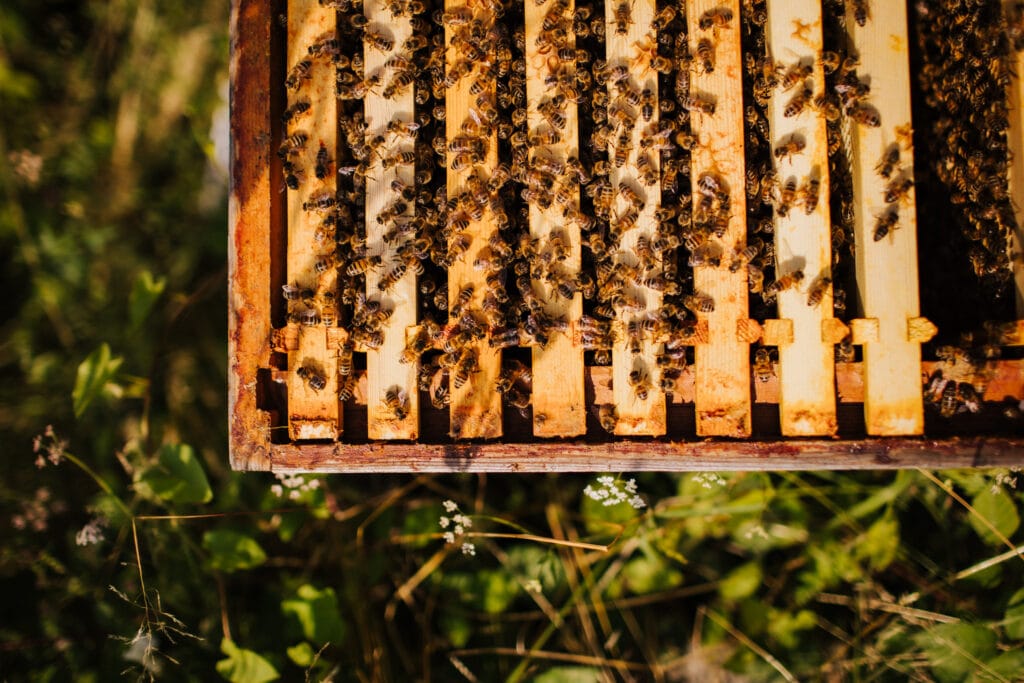
So, you’ve bought a nuc? Welcome to the world of beekeeping! A nucleus colony (or “nuc”) is a small, established colony complete with a laying queen, brood, and worker bees — the perfect head start for a new hive. This guide walks you through settling your first nucleus colony into your apiary, from the moment you collect it to ongoing inspections.
Getting Started With Your Nucleus Colony
1. Safety First
Before handling your bees, wear a bee suit and gloves, and have a smoker ready. The bees may be slightly agitated after transportation and eager to explore their new environment.
2. Placing the Nuc Box
When you collect your nuc(s), place them in the exact location where you plan to position your hive(s). This helps minimise disruption when transferring the nucleus colony.
- Open the entrance: The entrance is a rotating coloured disc on the front of the box.
- Provide shade: Place a hive roof or a board over the nuc to prevent direct sunlight from overheating the bees.
- Orientation flights: Once the entrance is open, bees will start flying in circles around the area. This is normal — they are memorising their new location. This can continue for a few hours before they begin foraging.
Transferring Your Nucleus Colony to the Hive (After 24 Hours)
To help the bees settle into their new environment, leave your nucleus colony in the nuc box for at least 24 hours before transferring them to a full-sized hive.
Transfer Steps
- Prepare the hive:
- Lightly smoke the nuc entrance to calm the bees.
- Move the nuc box to the side and place your hive in position.
- Remove the centre 6 frames from the hive to make space.
- Open the nuc box:
- Carefully cut the securing tape and remove the roof.
- Lightly smoke the inside if needed to keep the bees calm.
- Transfer the frames:
- Using your hive tool, gently lift the first frame out of the nuc.
- Place it into the centre of your hive, keeping the frames in the same order and orientation as they were in the nuc box.
- Repeat for all frames until the brood box is filled.
- Move remaining bees:
- Some bees will still be inside the box. Lightly tap them into one corner and shake them directly into the hive.
- Leave the empty nuc box nearby so any remaining bees can find their way to the hive.
Feeding & Early Care
Feeding Your Bees
- Providing sugar syrup is highly recommended, especially if you are installing your nucleus colony onto fresh foundation (empty comb).
- A frame feeder or equivalent should be used.
- If using drawn comb, the bees will settle in more quickly, but feeding will still help them establish.
When to Stop Feeding
- Continue feeding until the colony has expanded to cover the entire brood box.
- This process usually takes 1–2 weeks, depending on weather and nectar availability.
- Once the bees have filled the brood box, you can add a queen excluder and super boxes. Adding them too early can slow down colony growth, as the bees will struggle to maintain warmth in a larger space.
Ongoing Care & Inspections
- First inspections: After installation, monitor the bees regularly but avoid excessive disturbance.
- Routine checks: Inspect the nucleus colony every 7–10 days during the active season to ensure:
- The queen is present and laying eggs.
- The colony has sufficient food stores.
- No signs of disease or pests.
- Swarm control measures are in place if necessary.
- Swarm prevention: As the colony grows, watch for signs of swarming and take appropriate steps to manage it.
Important Notes
- Report any concerns promptly: If you notice any abnormalities, health issues, or have concerns, please contact your nuc supplier as soon as possible in writing, with photos if applicable.
- Time-sensitive support: Suppliers can only offer assistance for a limited period after purchase. Delayed reports make it harder to resolve issues, so make sure you get in touch promptly.
- Beekeeping knowledge required: Bees are living creatures, and their care requires proper research and preparation. Your supplier will assume that all customers have completed basic training or research before acquiring a nucleus colony.
Helpful Resources
- British Beekeepers Association — www.bbka.org.uk
- National Bee Unit (BeeBase) — www.nationalbeeunit.com
Andre & Jane Cardona
The Honeybee Man Ltd.